Enrico Furlan and the future of non-invasive primary diagnostics
In this interview with Enrico Furlan, President and CTO of Ad Astra, we explore the potential of remote photoplethysmography and the role of Traicorder in non-invasive primary diagnostics.
Video: Interview with Enrico Furlan, President and CTO of Ad Astra
Biomedical innovation and digital medicine: Traicorder among the new solutions shaping the future of healthcare
In recent years, the biomedical sector has been undergoing an unprecedented transformation. Digital technologies, artificial intelligence and new monitoring tools are redefining the way healthcare systems can take care of people.
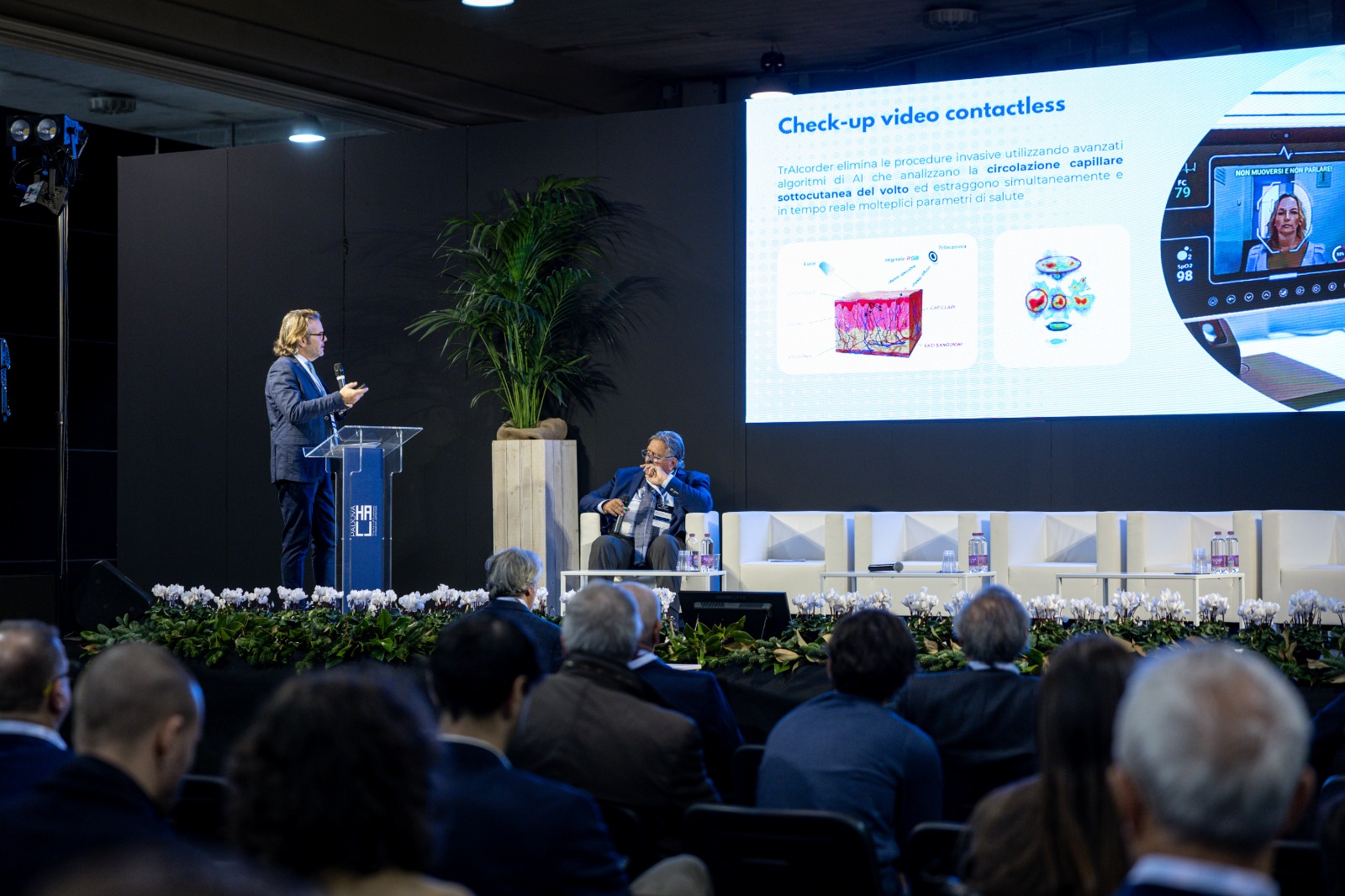
During a recent meeting that brought together around 80 companies, researchers and industry experts, the discussion focused on the future of biomedical innovation in the Veneto region, a sector that today is worth more than 5 billion euros and represents one of the most dynamic clusters at the national level.
The event, organized by several regional institutions including Venice Promex, aimed to foster dialogue between researchers, companies, innovators and citizens, in order to understand how new technologies can become truly accessible within healthcare systems.
Technological innovation and access to healthcare
Technological progress in the biomedical sector is extremely rapid. However, one of the main challenges highlighted by experts concerns citizens' access to innovation.
Despite the development of increasingly advanced tools, many healthcare systems are currently facing organizational and structural difficulties that slow down the adoption of new technologies. In some cases there is even discussion of a crisis in access to traditional healthcare services.
For this reason, collaborative work between the different actors of the healthcare ecosystem becomes essential:
- • citizens and patients
- • healthcare professionals
- • industry managers and operators
- • institutions and policy makers
Only through collaboration between all stakeholders will it be possible to transform technological innovations into concrete solutions for public health.
The role of digital medicine
One of the main development directions that emerged during the discussion is that of digital medicine.
The digitalization of healthcare processes is today one of the most important opportunities to improve the efficiency of healthcare systems. The goal is to support the transition from traditional models — often complex and costly — toward more agile and effective technological solutions.
Among the main benefits of digital healthcare are:
- • reduction of healthcare professional burnout
- • optimization of intervention times
- • improved healthcare cost management
- • greater accessibility to screening and monitoring services
In this context, new technological solutions are emerging that are designed to simplify and make monitoring and prevention activities more accessible.
Innovative technologies for prevention and screening
The evolution of biomedical technologies is paving the way for increasingly advanced tools for primary diagnostics and non-invasive screening.
Systems based on video analysis, artificial intelligence and digital sensors now allow physiological measurements to be performed without physical contact, making access to basic health checks faster and easier.
These solutions can be used in various contexts:
- • healthcare facilities
- • pharmacies
- • community screening points
- • public prevention initiatives
The goal is to bring technology closer to people, reducing barriers and waiting times for access to healthcare services.
Towards more accessible and sustainable healthcare
The future of healthcare inevitably involves the integration between technological innovation and the organization of healthcare systems.
The challenge is not only to develop new technologies, but also to make them truly usable and widely adopted, so that they can concretely improve people’s quality of life.
Biomedical innovation therefore represents not only a technological frontier, but also an opportunity to build more efficient, sustainable and accessible healthcare systems.